
Plant Spotlight: Aloe vera
At the time of writing, it’s almost Summer! Which means it is Aloe vera’s time to shine— right along with the Sun! If your idea of Aloe vera is some smelly, green gloop from a bottle, think again! Aloe vera is a succulent native to Africa but is common everywhere. Cleopatra was said to have used it in beautification treatments, and depictions of the Aloe plant have been found on clay from ancient Sumer.
Aloe is a household must, especially for sun worshippers (like me!). It’s demulcent, anti-inflammatory, and moisturizing properties make it an indispensable plant to have growing in your medicinal garden. The gel from the aloe cactus can be used for burns of all kinds, as well as other dry, inflammatory and itchy skin conditions, like psoriasis, dandruff, dermatitis and even in the final stages of poison oak.
And the benefits of Aloe aren’t just skin deep! The mucilage is demulcent and soothing to all mucous membranes, having an affinity for the digestive tract. It can be a treatment for ulcers and upper digestive inflammation.
Aloe is a yin tonic, meaning that it will treat yin deficiency with signs of heat- think hot flashes and night sweating. It is also used to address pitta imbalance, due to it’s cooling and bitter properties.
Taken internally, Aloe, amazingly, has immune modulating actions— enhancing and even increasing T-cell function and Natural Killer (NK) cell activity!
Of course there are a few times when the use of Aloe internally is not appropriate- like during pregnancy, lactation or in childhood, as well as with active intestinal inflammation.
Overall, Aloe vera is a gentle, and powerful remedy, that grows easily in most locations. Next time you’re at the local farmer’s market or plant store, don’t leave without picking up one of these beautiful and healing plants!
(See preparation methods below.)
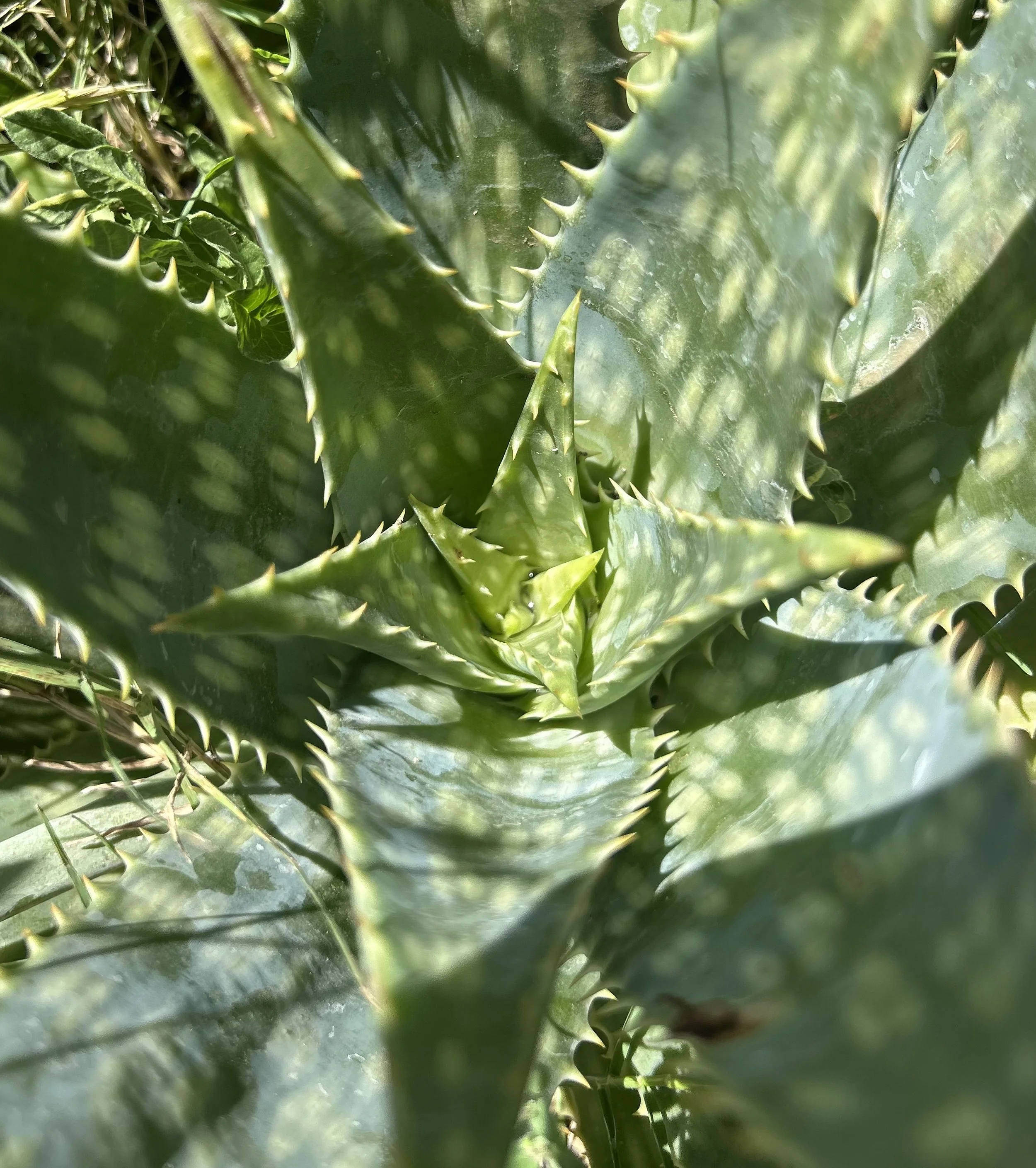
Aloe Vera
Family: Xanthorrhoeaceae
Preparation of fresh Aloe:
For external use- First, use a sharp knife to cut the Aloe leaf as close to the base as possible. Next using a small and sharp knife, skim the edges of the leaf to remove the thorny edges. Then, filet the leaf to expose the gel-like flesh. Score the flesh to release the gel and apply directly to the affected area,
To consume internally- Follow the first three steps listed above. After exposing the flesh within the leaf, use a sharp knife to scrape out the flesh, leaving behind the bitter skin. Place the chunks of flesh into a blender, and add a little spring water to liquefy. Store in a jar with a tight fitting lid and consume within 7-10 days.
